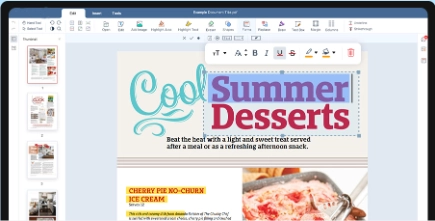
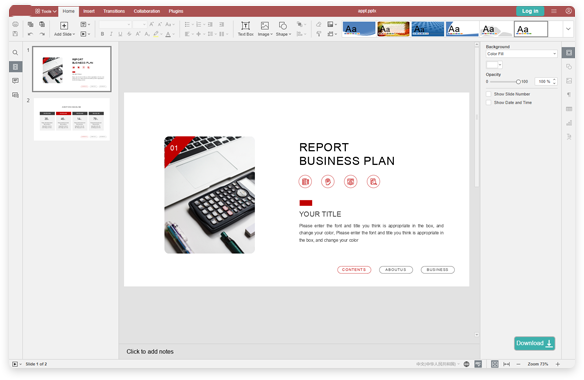
What you should know about PDF Online, PDF files, and desktop PDF software
People look for PDF Online, an online PDF editor, or a way to edit a PDF online when they need to finish a task now—not when they want to manage installers or subscriptions. Maybe you are on a school Chromebook, a shared office PC, or a work laptop that blocks new software. QwerPDF PDF Online keeps the job simple: open a PDF in the browser, make your changes, and download—without treating every small fix like a full Adobe Acrobat project.
How browser-based PDF editing differs from desktop PDF software
Desktop tools such as Adobe Acrobat are built for long sessions: prepress checks, redaction, advanced forms, digital signatures with certificates, and batch automation. A PDF Online tool like QwerPDF focuses on what most everyday files need—correcting text, adding notes and images, reviewing pages—and on getting you to a clean PDF download. You trade some power-user features for speed: no waiting for a heavy app to start, and no wondering whether this machine has the right license.
That does not mean “less serious.” Invoices, notices, application forms, and one-page contracts spend most of their life needing only small changes. For those jobs, edit the PDF online, download, and send—then open the same file in a desktop editor later if someone needs advanced features.
What is a PDF file—and why might text sometimes be hard to edit?
A PDF (Portable Document Format) stores text, fonts, images, and exact page positions so a document looks the same on every screen and printer. That is why PDF is the default format for sharing final documents. Unlike a Word file, a PDF is not built around flowing paragraphs: each line is placed at fixed coordinates, which is great for faithful layout but means large rewrites are better done in the original source file.
If a PDF was created from a scan, the pages may be pictures of text rather than real text, so they cannot be edited word by word until OCR (text recognition) is applied. If a font is not embedded, edited text may appear in a similar replacement font. For final handoff, check the pages you changed before sending or printing.
Practical tip: If your file needs certified digital signatures, permanent redaction of sensitive data, or print-shop color checks, finish those steps in dedicated desktop PDF software. QwerPDF PDF Online is built for everyday PDF fixes and reviews—not for every niche professional feature.
Who benefits most from QwerPDF PDF Online?
Students and teachers can open and annotate handouts on any lab machine. Remote workers can fix a typo in a report without asking IT to install software. Small businesses can update a price list or notice and send a clean PDF without buying another license for a shared PC. Anyone who has thought, “I just need to change one line in this PDF,” gets a shorter path through PDF Online than through a full desktop suite.
PDF Online vs Adobe Acrobat online tools
Adobe’s online tools are capable and familiar if you already have an Adobe account and subscription. QwerPDF PDF Online is aimed at people who want the file first: upload a PDF, use Next, edit or view the PDF online, and hit Download. You are not choosing a different kind of document—just a faster on-ramp when installing software or signing into another account is not the right fit for the moment.
Sending an edited PDF to other people
Most recipients simply open a PDF in their browser, phone, or desktop reader. After you edit the PDF online with QwerPDF, download it, give it a clear file name (for example, Invoice-2026-03-final.pdf), and send it the way you normally share files. Because PDF keeps fonts and layout together, recipients usually see exactly what you saw in the browser.
When the goal is “no more changes,” PDF is already the safest format: layout is fixed and numbers are hard to alter by accident. When someone needs to keep rewriting the content, share the original source file (such as DOCX) alongside the PDF, or convert the PDF to Word first.
PDF or Word: which format should you work in?
PDF is best for final delivery—contracts, forms that should not shift, and anything you will print or archive. DOCX is better while content is still changing a lot. A practical rule: draft in Word, deliver in PDF, and use PDF Online for the small last-minute corrections that do not justify going back to the source file. If you need heavy rewrites, convert the PDF to Word, edit, and export a fresh PDF.
Using PDF Online on a borrowed or shared computer
QwerPDF PDF Online is built for desktop browsers on a laptop or PC—think library terminals, a colleague’s workstation, or a hotel business center where installing software is not an option. Opening your PDF in the browser beats hunting for an installer or signing into someone else’s account. When you finish, download your file and close the tab so nothing is left open on a shared machine.
PDFs from scanners, phones, and other apps
Not every PDF is created the same way. Files exported from Word, Google Docs, or design tools usually contain real text that is easy to edit. PDFs from scanners or phone camera apps are often images of pages; you can still view, annotate, and add text on top of them, but changing the original words requires OCR first. If a file behaves unexpectedly, re-export it from the original app or print it to a new PDF before editing.
When the file looks wrong: a short checklist
If edited text looks different, check whether the original font was embedded—missing fonts are the usual cause. Next, see whether the page is a scanned image rather than real text. Third, if the file is password-protected or restricted, unlock it with permission from the owner before editing. Finally, for damaged or very large files, try re-saving or splitting the PDF and uploading a smaller part.
Safety, privacy, and smart habits
Any online PDF editor should be treated with the same care as email or cloud storage: upload only files you are allowed to share with that service, and avoid confidential data if your employer says so. On the live QwerPDF site, your file is automatically removed from our servers within thirty minutes after you save or download—always read the current privacy and retention policy for the authoritative wording.

 Tools
Tools

 Word ONLINE
 Sheet ONLINE
 Presentation ONLINE
 Create
 Document
 Sheet
Sheet
 Presentation